As our nation marks 250 years since the American Revolution, Princeton sits at the heart of the story. But history isn’t just about the past; it’s also about the people living through it right now.
Voices of the 250th is a special addition to our Voices of Princeton oral history project. Here, your neighbors, friends, and fellow community members share their honest reflections on this historic milestone. Listen in as they look back on America’s 1976 Bicentennial celebrations, share their perspective on today’s “unfinished revolution,” and reveal their hopes for the future of our country.
Tap below to hear featured highlights from the collection!
About This Project
Voices of the 250th is an initiative of the Princeton Public Library, funded by a grant from the New Jersey State Library’s REV 250: Examining the Semiquincentennial through a Jersey Lens program. We are grateful to the Historical Society of Princeton, Arts Council of Princeton, and Morven Museum & Garden for their vital support in promoting and preserving these stories.
Interested in participating in the Voices of Princeton Initiative?
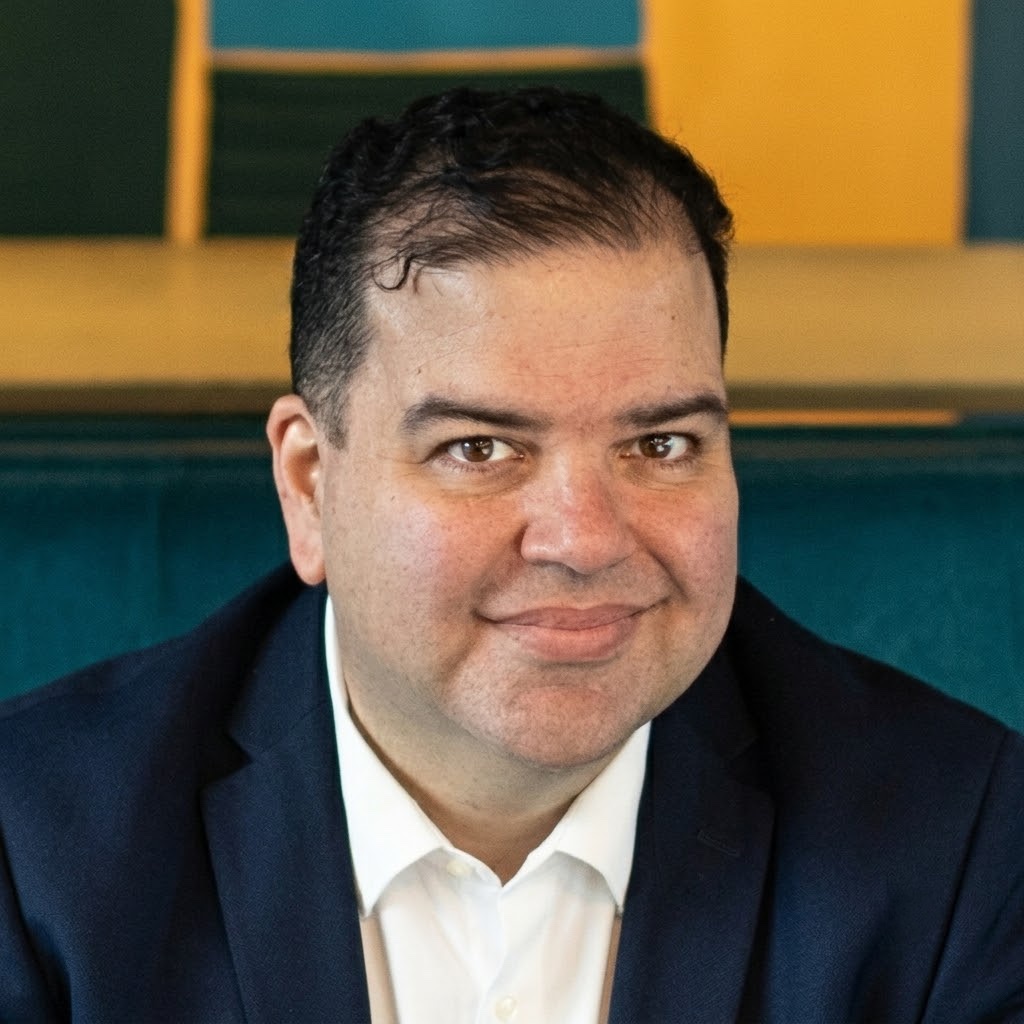
Interview with Mark Freda on June 11, 2026. Recorded at the Princeton Public Library.
Transcript
Mark Freda: [00:00] if we look at Princeton’s past, I will always be a great defender of Princeton, a great supporter of Princeton, the municipality, but you know history is history, and there are times that we should look back at and say, what the heck were people thinking? I mean, segregated schools for very long time, students and administrators at the university having slaves on campus, I mean, really, so you have to look at what we did right, but also what we did wrong, and what were the things and the people involved in trying to say let’s move from the wrong to the right, and sometimes how hard those efforts were, but also how successful those efforts were, but you need to always appreciate the past, where we came from, and have the ability to say, let’s not go backwards, let’s not repeat the mistakes of the past, and let’s continue [01:00] to move together, to move forward together and be one community for everybody, and again, I think if we appreciate the past, it’s going to help guide the future and help us make good decisions about Princeton. Should be a place that’s for everyone that wants to be here, we’re tolerant of everyone, we’re respectful of everyone, and we’re welcoming of everyone. Not everybody was born in this country that built this country, so it’s not just the past of Princeton, it’s the past of the entire country. I mean, if we didn’t have people come from all over the world to this country, this country would not exist as it does today, so let’s just remember that, and use that kind of as a guidepost going forward.
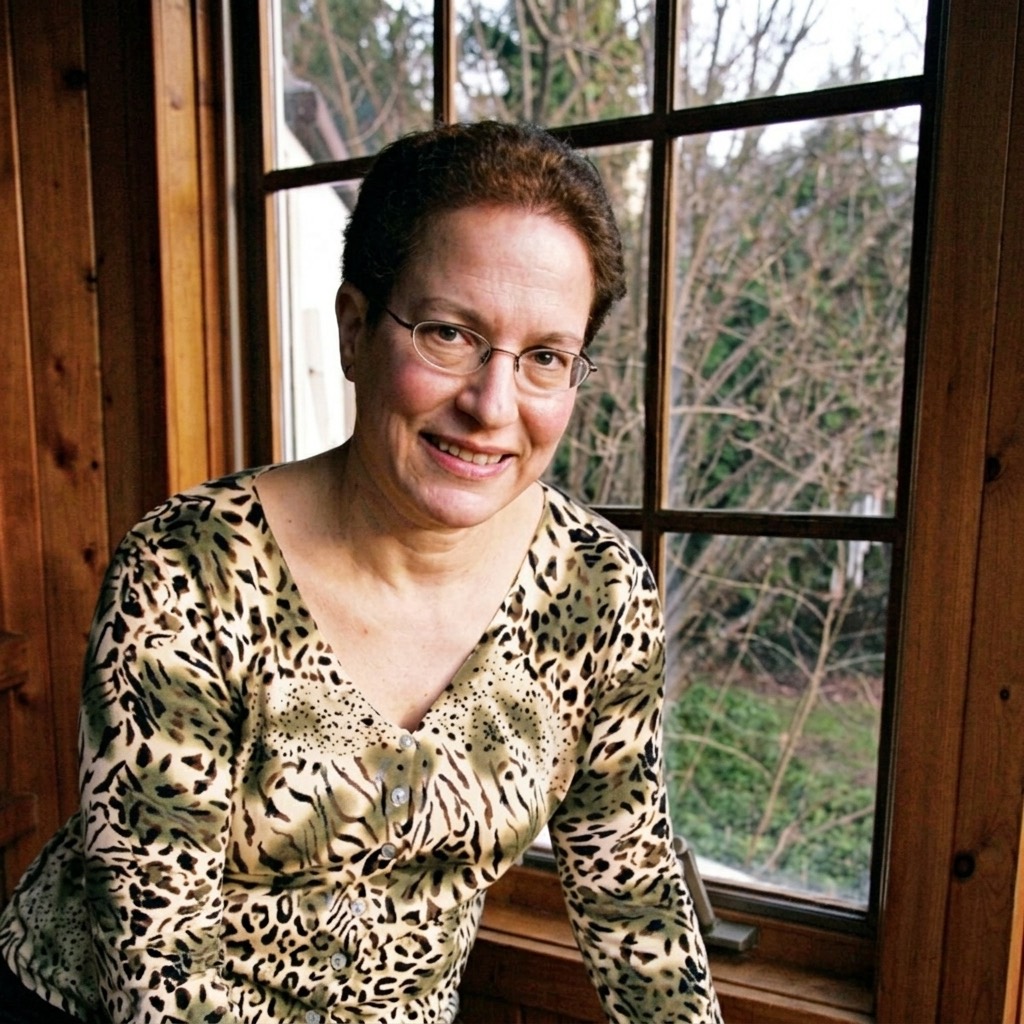
Shelley Frisch
Interview with Shelley Frisch on May 21, 2026. Recorded at the Princeton Public Library.
Transcript
Cliff Robinson: [00:00] …as you look around at how the 250th is being marked, whether it’s here in Princeton, throughout the state, or nationally, what has caught your attention?
Shelley Frisch: [00:11] This is a difficult question to answer, because I’ve been steering away from it, feeling as though it’s been co-opted by our current president, who is making it all about him, and I would love to celebrate this country. It’s just become very difficult now under the current circumstances. I’m hoping that changes.
Cliff Robinson: [00:37] Do you have any thoughts about how the 250th should be observed?
Shelley Frisch: [00:44] Love to have a new president by then. And let’s see, I’d like the Congress to start working. I mean, these are not things specifically about the celebration, but I feel as though this is such a huge obstacle right now that it’s hard to feel celebratory.
Cliff Robinson: [01:05] Okay, thank you for sharing. So, as you imagine the country changing over the next fifty years, what kind of political future do you hope for? What concerns you when you think about the ideals of 1776? How do they show up, or not, in politics today?
Shelley Frisch: [01:21] Well, the founders had a lot of really great ideas, such as separation of church and state, following the law, the Constitution, all of which are not being followed at the moment. So the biggest change I would like to see is going back to those principles, while retaining the great deal of progress we’ve made in other regards, equality for women, equality for people of all backgrounds. I’d like to see us welcome immigrants again the way we are supposed to. We’re a country of immigrants, and that’s been overshadowed. Everything that this country has stood for is now under a terrible cloud, and while I don’t want to go backwards, because there are a lot of things that were very problematic in 1776—slavery, and so on—I’d like to see some of the ideals, not necessarily the practices, but the ideals restored. I’d also like to see us return to some of the the ideas that came up in previous Democratic administrations about helping the environment survive because we all breathe air and drink water and it would be nice if we could do that without dying and I would like to see us strengthen our bonds to other countries, which have been endangered in previous years. So, I guess that’s what I’d like to see.
José Pabón
Interview with José Pabón on May 28, 2026. Recorded at the Princeton Public Library.
Transcript
José Pabón: [00:00] So, yeah, along the lines of what I said earlier about how, as a society, we have–we still have traditions at a place like Princeton, Princeton Town, Princeton University. I heard this one professor, this African heritage female professor, say a place like this fetishizes traditions, but there are some traditions that we no longer hold for very good reasons, [such as banning (JP)] interracial marriages, women not being able to vote, and so on and so forth. So, as I look around, and now in the 250th centennial, I think it’s famously Franklin, no, the guy with the kite—
Erica Bess: [00:44] Benjamin Franklin.
José Pabón: [00:45] Benjamin Franklin, yeah, I was gonna say Franklin Roosevelt. Benjamin Franklin, when he came out of the Philadelphia Assembly and was asked what’s the government going to be, he famously is thought to have said, “It’s a republic, if we can keep it.” So I, yeah, I see a lot of divisiveness in our country, and even in a town that is, as I can appreciate it, as I am, very cognizant of human rights and very respectful of all races and all genders, you still see some people who openly support the convicted felon, who’s currently in the White House, and see support of federal government [agents that kidnap (JP)] without due process and deports citizens and non-citizens alike, and I’m fearful–I’m concerned, emotional, as you can see, and I apologize for that, but I do think that it’s likely we can keep this republic, but it’s going to take all of us being cognizant of what’s going on and speaking up about the things that we need to speak up and protest when we need to protest, vote whenever we need to vote, so that we can keep the republic that our forefathers in 1776 set up. Thank you for the question of your time.
Lance Liverman
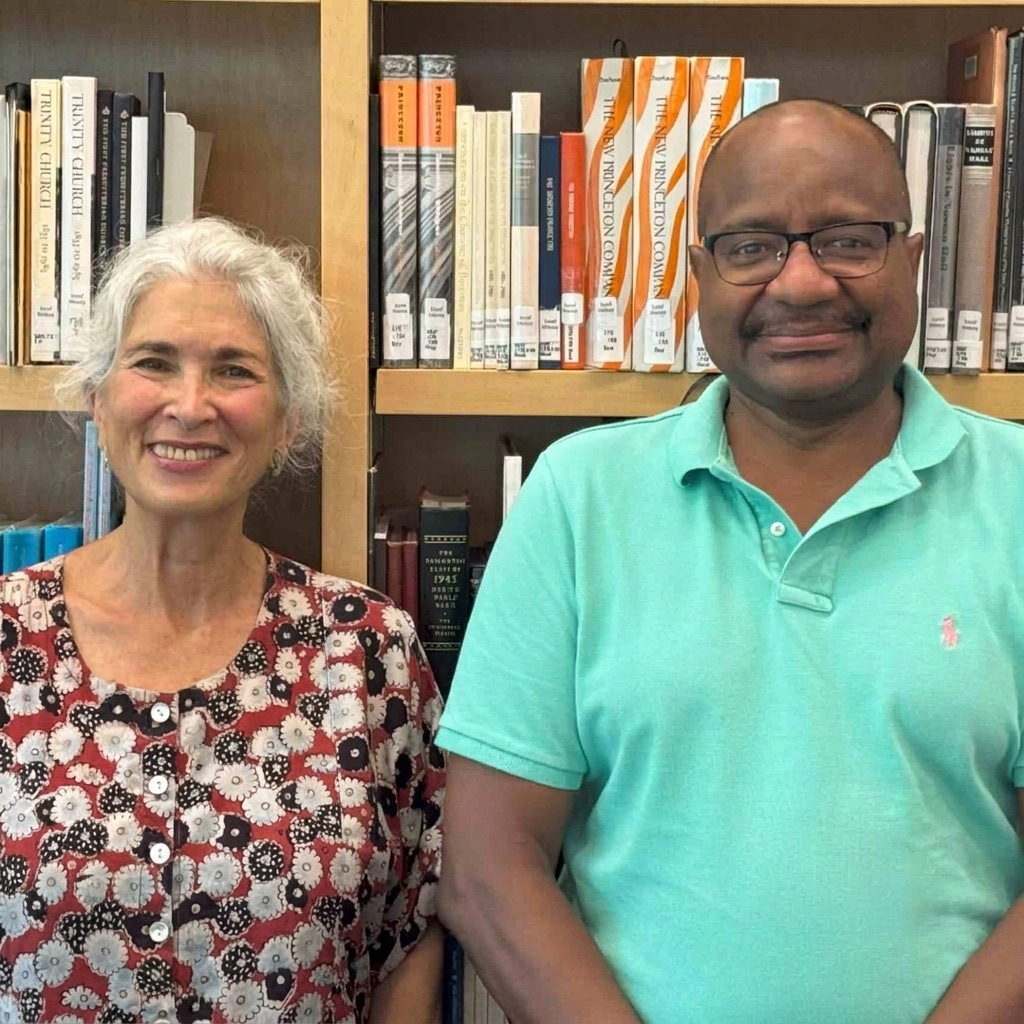
Interview with Lance Liverman conducted by Ellen Gilbert on July 30, 2025. Recorded at the Princeton Public Library.
Transcript
Ellen Gilbert: [14:59] So, in a recent article you wrote for Princeton Perspectives, you said that you quote, unquote, “personally feel that democracy is on trial.” Talk about that, especially in light of the coming 2026 celebration of America’s independence, and also you were here in 1976.
Lance Liverman: [15:26] [Laughter] Yeah, I’ve been here a while.
Ellen Gilbert: [15:28] What was it like then?
Lance Liverman: [15:31] Democracy is relatively new when it comes to a form of government. Democracy has been tested time after time. My thinking and my reasoning—and this is talking to a lot of political pundits and various people—is that with the current situation we’re in, and I’ll just be honest, the Trump administration and the things that have been occurring. Democracy is being tested. The three branches of government are being tested. The people’s will, what they accept and what they don’t accept, is being tested. And my thinking—and this is just me, I’m just one person—that we are entering dangerous times, and a lot of us don’t see it, because we—our rights have been taken away from us, and we don’t realize that that is what is occurring. And that’s what I meant when I said democracy is is being tested. And, yeah, we’re, what, 250 years anniversary coming up. I think it’s great. I mean, there’s no other country I would want to live than the United States, and that’s why I try to do what I can to preserve and keep things going the way they are. I just, I love the United States. I mean, I’ve, I think that we’re the best country in the world. Um. I just want to keep us that way. [Laughter] I want to keep us the best country in the world, and not slip backwards. And it can happen.
Ellen Gilbert: [17:12] Do you remember the 1976 celebration?
Lance Liverman: [17:15] I do.
Ellen Gilbert: [17:15] Maybe you were in North Carolina.
Lance Liverman: [17:17] I was here. I was here in 1976 and for that celebration, I bought a Varsity Schwinn from Kopps, Kopps Bicycle place that said it was a 1976 edition. And that’s, that’s a Schwinn 10 Speed I bought. Because of the 1776. I remember very well. And Kopps was on John Street, then, over that way.
Ellen Gilbert: [17:41] So, do you have advice for people, since things feel threatening now?
Lance Liverman: [17:47] Yeah, I still believe that people should vote, and I think that people should speak up, and I think that people shouldn’t be afraid this recent ICE raids that we’ve had in town. Yes, that have taken place, have in store nothing but fear. Fear in a lot of folks, you know, it’s—it’s awful, and the last thing you want to do is have any community not trusting our local government or our police. When that occurs, you’re in trouble, because if there’s outbreaks of TB, if there’s outbreaks of anything, and you don’t have that trust, then everyone’s going to be affected.
Kam Amirzafari
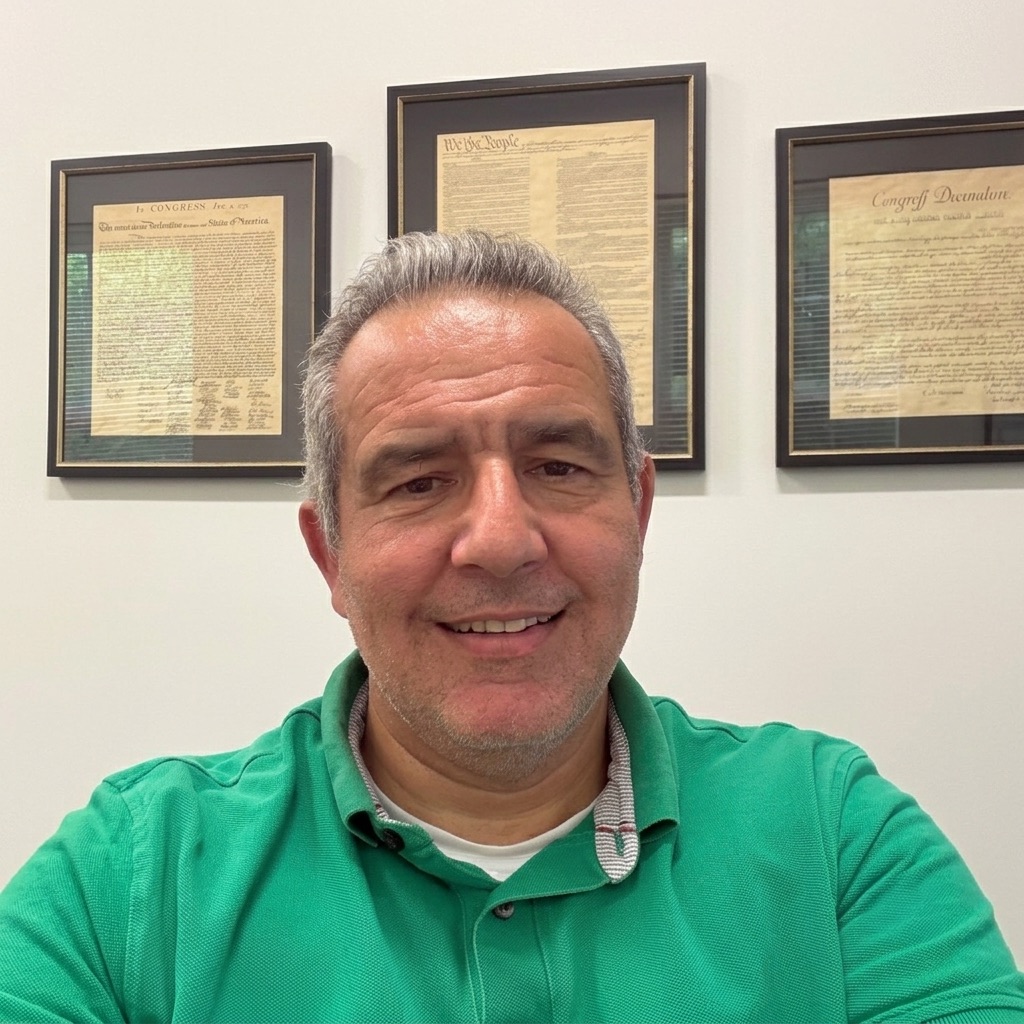
Interview with Kam Amirzafari on May 23, 2026. Recorded at the Spirit of Princeton Memorial Day Parade.
Transcript
Kam Amirzafari: [00:00] What amazes me about that is I have a copy of the Constitution in my office and Declaration of Independence, and that’s a whole separate story, and what people have to realize is how well it was thought out, how the whole Electoral College and all the purposes, so one group didn’t get to go over another group, which happens in the rest of the world, whether it’s some religious sect or politics or left-handed, whatever it is, everybody, so the way it was crafted and the foresight they had to give all these liberties and put it in writing, and when you look at it, the checks and balances just truly amazing. So to me, when you think about what these people were able to put on paper from all these different groups and being persecuted during that time to even get there, and all the threat and stuff, and persevering for that freedom, it’s just amazing to me. So I feel, I don’t feel it’s an unfinished project, again we have rules and laws in place to make any changes, and follow the rules and laws, and make the changes if you want something different.
Walter Frank
Interview with Walter Frank on May 21, 2026. Recorded at the Princeton Public Library
Transcript
Cliff Robinson [00:00]
So, when you think about the ideals of 1776 how do they show up or not in politics today?
Walter Frank [00:08]
Well, they show up more by their absence, I think, than anything else. I mean, one of the things that is very troubling, and this is true of both parties, I think, is that let’s put it this way, one of the things that I think our founders would find most perplexing is how politics has become a career. They didn’t envision it that way, partly because travel was so difficult, but who would want to stay away from family for as long as you might have to, and, and Washington, D.C. was no picnic to live in, so you know, the, the, let’s see, the question is, How do the ideals show up? You know, I think we need to get back to this notion of the two parties each representing something good and not vilify each other, you know. It’s interesting. Go back to 1976 et cetera, let’s say, the Republicans stood for a certain prioritizing of the private sector. The stories they like to tell were of people who had made it the hard way, etc. The Democrats liked stories about villages and compassion. You knew the impulses of each party, and together they made kind of a whole with sometimes one prevailing over the other, depending on the needs of the moment, etc. We don’t have that feeling today. Now, both parties want the other to fail, which can only be bad for the country. You know, a lot of the critical legislation that was passed in the 1960s, the civil rights legislation, Medicare, Medicaid, they all had bipartisan support, some more than others, but basically they had bipartisan support, and today you know one of the reasons that, you know, any legislation that passed is almost has potentially an expiration date is because they don’t have bipartisan support by and large. Now today I just read that there was a bipartisan bill passed on housing, which that would be terrific if it was, assuming it was, had real teeth.
Cliff Robinson: [02:25]
Okay. Thank you.
Voices of Princeton is a collaborative oral history initiative created by the Princeton Public Library, the Historical Society of Princeton, the Arts Council of Princeton, and the Witherspoon-Jackson Historical and Cultural Society.